English
 日本語
日本語 Tiếng Việt
 繁體中文
繁體中文 بالعربية
 Արմենյան
 한국어
한국어 Русский
 Türkçe
 คนไทย
คนไทย nederlands
 Română
 Gaeilgenah Éireann
 Português
 Indonesia
 Polski
 Español
 magyar
 Nederlands
 हिंदी
हिंदी Eesti
Eesti
What should be noted before using a fire hose?
What should be noted before using a fire hose?
Must-Check Items Before Fire Hose Use_Guide to Hose Status and Supporting Equipment Verification
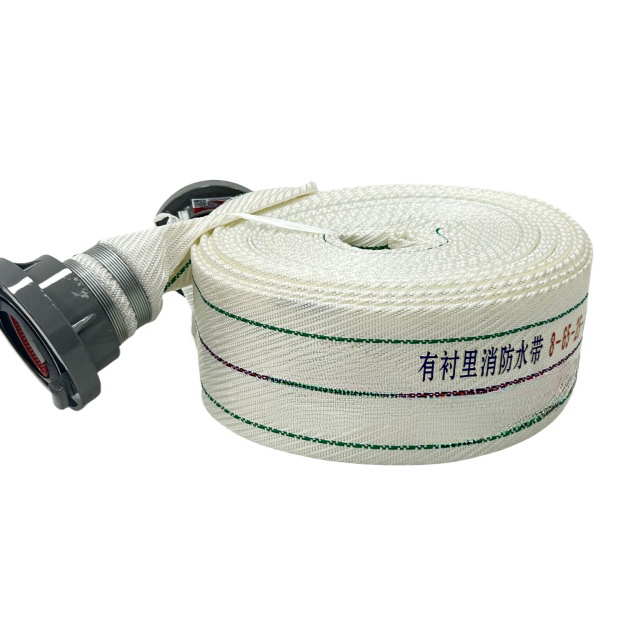
This article focuses on the core pre-use inspection points of fire hoses, including key contents such as hose material, validity period, appearance integrity, interface sealing performance, and matching degree of supporting equipment. It also details the hose pretreatment requirements in special environments to ensure the stable conveying performance of hoses during fire fighting.
Complete Inspection Checklist Before Fire Hose Use: 6 Core Points to Eliminate Water Conveyance Failure Risks
A fire hose is a key conveying component connecting the fire water source and the fire extinguishing terminal, and its status directly determines the efficiency and safety of initial fire fighting. Ignoring inspections before use may lead to fatal failures such as hose burst, interface leakage, and insufficient water pressure. Therefore, it is necessary to follow the four core principles of "material adaptation, intact status, equipment matching, and environment adaptation" to complete comprehensive inspections and pre-treatment. This article sorts out the must-check items before fire hose use from six dimensions: basic attribute verification, appearance integrity inspection, connection component verification, supporting equipment matching, special environment pre-treatment, and safety preparation.I. Basic Attribute Verification: Confirm Hose Adaptability to the Scenario
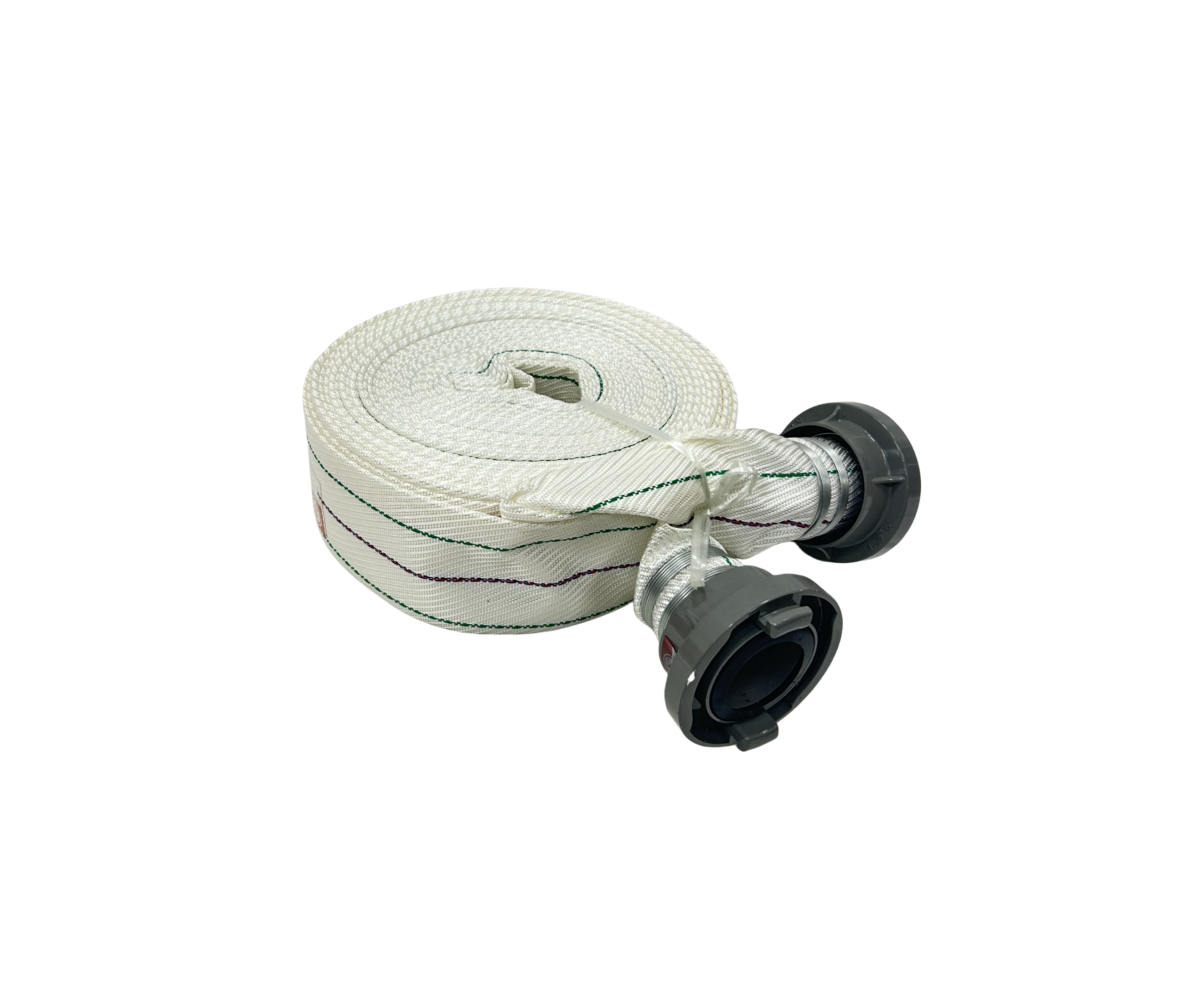
Before use, first check the hose's material, pressure resistance level, applicable medium, and validity period to ensure full matching with the application scenario. Mixing or misusing hoses is strictly prohibited.- Material and Applicable Medium Verification
- Clear water fire extinguishing scenarios (fire hydrants, water sprinkler systems): Prioritize rubber hoses or polyurethane hoses. Special foam mixture hoses (nitrile rubber material) are strictly prohibited, as the material is not resistant to long-term immersion in clear water, which accelerates aging.
- Foam fire extinguishing scenarios (oil, solvent fires): Special foam mixture hoses must be used. Their nitrile rubber inner layer is oil and solvent resistant, preventing the hose from being corroded and leaking by foam concentrate.
- Pressure Resistance Level Matching
- Check the rated pressure resistance value marked on the hose (common specifications: 1.0MPa, 1.6MPa, 2.5MPa), which must be 1.2 times higher than the system working pressure. For example: if the fire pump outlet pressure is 1.0MPa, a hose with a rated pressure resistance ≥1.2MPa should be selected.
- High-pressure fire extinguishing scenarios (e.g., industrial high-pressure water gun systems): Heavy-duty rubber hoses with pressure resistance ≥2.5MPa must be used. Lightweight polyurethane hoses are prohibited to prevent bursting under high pressure.
- Validity Period and Compliance Inspection
- The statutory service life of fire hoses is usually 3-5 years (2-3 years for foam mixture hoses). Check the production date on the hose certificate. Expired hoses must be scrapped, and use of defective hoses is strictly prohibited.
- Verify that the hose has a fire product certification (CCCF certification). Non-standard hoses without certification shall not be used for fire emergency response.
II. Appearance Integrity Inspection: Eliminate Damage and Hidden Faults
Appearance inspection is a key step to detect obvious and hidden damage to the hose. The hose must be fully unrolled for comprehensive visual and tactile inspection.- Surface Damage Inspection
- Check the outer braided layer of the hose: no thread jumping, tearing, or excessive wear; touch the surface to check for stickiness, hardening, or cracking (aging hoses are prone to bursting under water pressure).
- Inspect the inner layer of the hose: after slight water filling, check for pinhole leakage or local bulges (bulges are mostly caused by inner layer degumming, which will expand rapidly and lead to bursting under high pressure).
- Length and Caliber Verification
- Confirm that the actual length of the hose matches the marked specification (common lengths: 20m, 25m) to avoid insufficient length to cover the fire area.
- Check the hose caliber (DN50, DN65, DN80), which must be fully matched with the fire hydrant interface and water gun caliber. Mismatched caliber will cause loose connection, water leakage, or excessive pressure loss.
III. Connection Component Verification: Ensure Interface Sealing and Firmness
Hose interfaces are high-risk areas for water leakage. Before use, focus on inspecting the interface structure, sealing rubber ring, and connection firmness.- Interface Status Inspection
- Internal thread interfaces: no thread deformation or rust, flat interface end face, no collision dents (deformed interfaces will cause poor sealing).
- Quick-connect interfaces: the buckle spring has good elasticity, can reset quickly after pressing, and has no jamming (jamming will lead to insecure connection).
- Sealing Rubber Ring Verification
- Check the sealing rubber ring inside the interface: no loss, aging, cracking, deformation, or hardening; the rubber ring must fit tightly in the interface groove without loosening or falling off.
- Spare rubber rings: carry 1-2 spare sealing rubber rings of the same specification to prevent on-site replacement failure due to rubber ring damage.
- Connection Firmness Test
- On-site test connection between the hose and fire hydrant/water gun: internal thread interfaces should be tightened at least 3 turns clockwise to ensure close fit; quick-connect interfaces should be pressed until the buckle is fully locked, with no loosening when pulled.
IV. Supporting Equipment Matching: Verify the Reliability of Linkage Components
The water delivery efficiency of the fire hose depends on the coordinated operation of supporting equipment. Before use, verify the status of fire hydrant valves, water guns, water distributors, and other components.- Fire Hydrant Valve and Water Distributor Inspection
- Fire hydrant valve: opens and closes flexibly without jamming; the valve stem is free of rust and can be fully opened after turning (half-open status will cause insufficient water pressure).
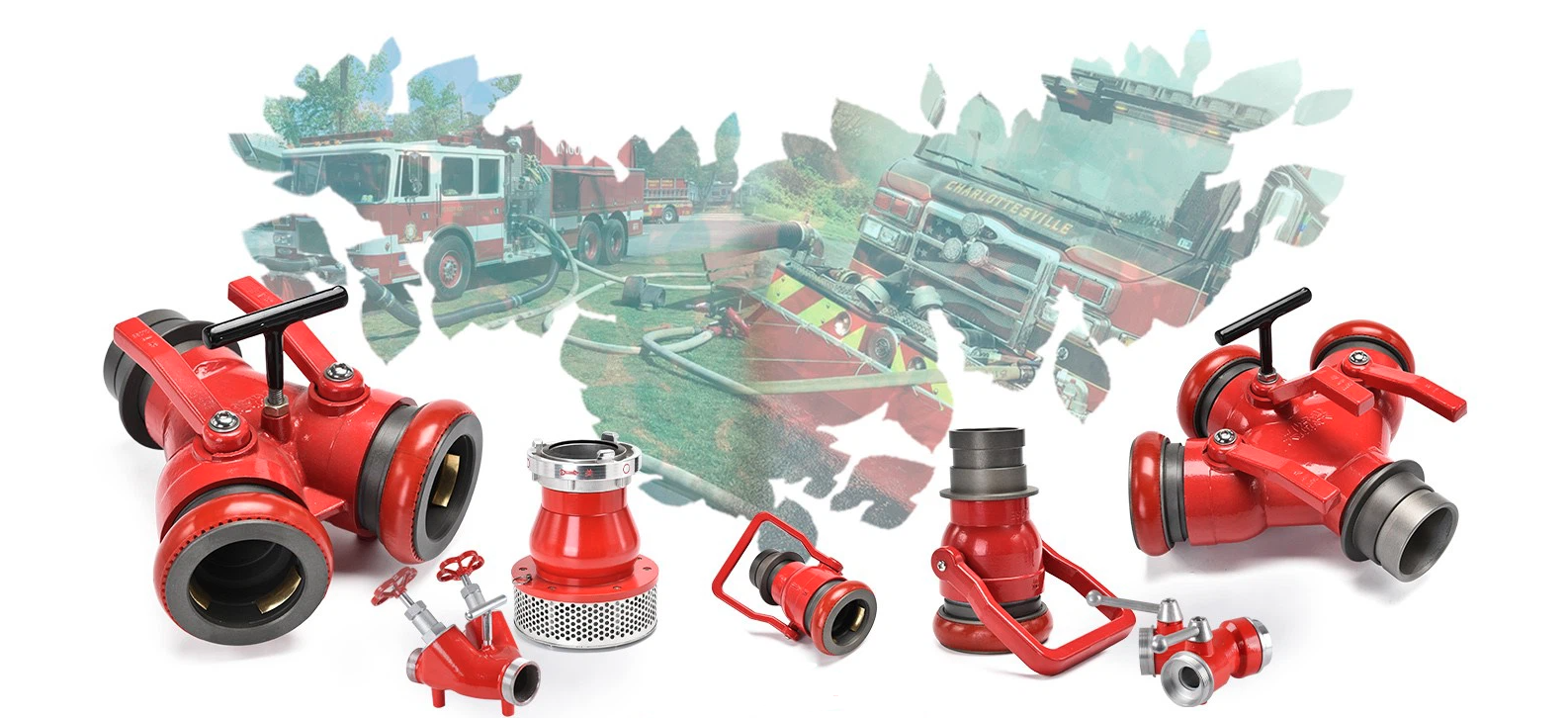
- Water distributor: check that the valves of each branch of the multi-interface water distributor switch normally, and the interface sealing rubber rings are intact to avoid water leakage during shunting.
- Water Gun Status Verification
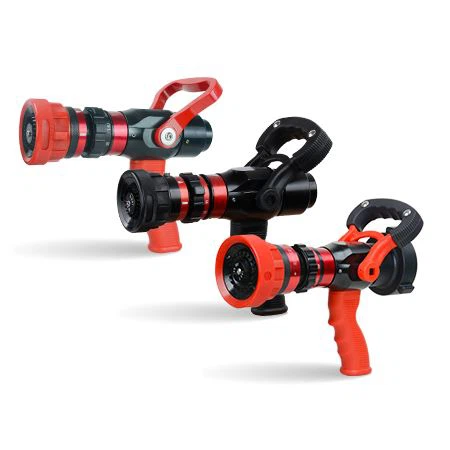
- The water gun nozzle is unobstructed and not deformed; the switch valve opens and closes smoothly without water leakage when closed; the spray mode switching (direct current/spray) function is normal.
- For high-pressure water guns, additionally check the gun barrel for cracks to prevent barrel bursting and injury under high pressure.
V. Special Environment Pre-Treatment: Targeted Solutions for Environment Adaptation
When using hoses in special environments such as low temperature, high temperature, and corrosion, pre-treatment is required in advance to avoid hose failure caused by environmental factors.- Pre-Treatment in Low-Temperature Environments (<0℃)
- Check if the hose is frozen: if residual water in the hose is frozen, do not bend or inflate it forcibly. Place it in a room temperature environment for natural thawing to prevent inner layer rupture.
- Pre-treatment measures: slightly preheat the hose (e.g., wrap it with an insulation blanket). After connection, open the valve slowly to flush possible ice residue with low-pressure water flow, avoiding high-pressure impact on frozen blockages.
- Pre-Treatment in High-Temperature Environments (>40℃)
- Check if the hose is aged by sun exposure: hoses exposed to long-term sun exposure will lose elasticity, and spare hoses should be replaced first.
- Protection measures: avoid direct contact between the hose and high-temperature equipment or ground. Lay thermal insulation pads during placement to prevent the braided layer from being damaged by high temperature.
- Pre-Treatment in Corrosive Environments (Coastal Areas, Chemical Plants)
- Prioritize hoses with stainless steel interfaces. Before use, check if the interfaces have salt spray rust. Rusty parts should be polished with sandpaper and coated with anti-rust oil.
- Chemical corrosive environments: rinse the hose immediately after use, but before use, confirm that there is no residual corrosive medium on the hose surface to avoid interface sealing failure.
VI. Safety Preparation: Improve Personnel Protection and Emergency Plans
Safety preparation before use is key to avoiding operational accidents. It is necessary to implement three key points: personnel protection, on-site cleaning, and emergency plans.- Operator Protective Equipment
- Operators must wear protective gloves (to prevent interface scratches) and goggles (to prevent eye injury from high-pressure water splashes); safety belts must be worn during high-altitude operations to prevent falls caused by hose dragging.
- On-Site Environment Cleaning
- Before unrolling the hose, clear sharp objects (nails, gravel, glass) and oil stains on the laying path to prevent the hose from being punctured or slipping.
- The hose laying path should avoid passing through densely populated areas to prevent accidental injury caused by hose burst or water gun detachment.
- Emergency Plan Preparation
- Clarify the on-site commander and assign a special person to monitor the hose status. If abnormalities such as water leakage or bulging are found, immediately send a shutdown signal.
- Prepare spare hoses and maintenance tools to ensure quick replacement in case of failure without interrupting fire extinguishing operations.
Core Summary
The core precautions before fire hose use can be summarized as "Three Inspections, Two Preparations, and One Adaptation": Inspect basic attributes (material, pressure resistance, validity period), inspect appearance status (damage, aging, leakage), inspect connection components (interface, rubber ring, firmness); prepare protective equipment, prepare spare parts; ensure the adaptability of the hose to the environment and equipment.In daily management, establish a regular hose inspection ledger and conduct pressure resistance tests quarterly; during fire emergencies, complete a rapid full inspection before use to avoid fire extinguishing failure due to hose faults. For fire operators, strictly implementing the pre-use inspection process is the core prerequisite for ensuring personal safety and fire extinguishing efficiency.