English
 日本語
日本語 Tiếng Việt
 繁體中文
繁體中文 بالعربية
 Արմենյան
 한국어
한국어 Русский
 Türkçe
 คนไทย
คนไทย nederlands
 Română
 Gaeilgenah Éireann
 Português
 Indonesia
 Polski
 Español
 magyar
 Nederlands
 हिंदी
हिंदी Eesti
Eesti
What should be noted before using a fire sprinkler head?
Must-Check Before Using Fire Sprinkler Heads: 7 Core Points to Eliminate System Failure Risks
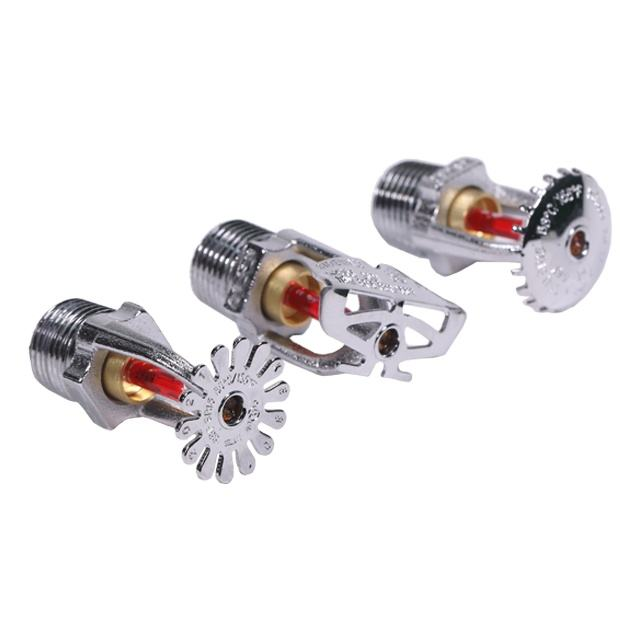
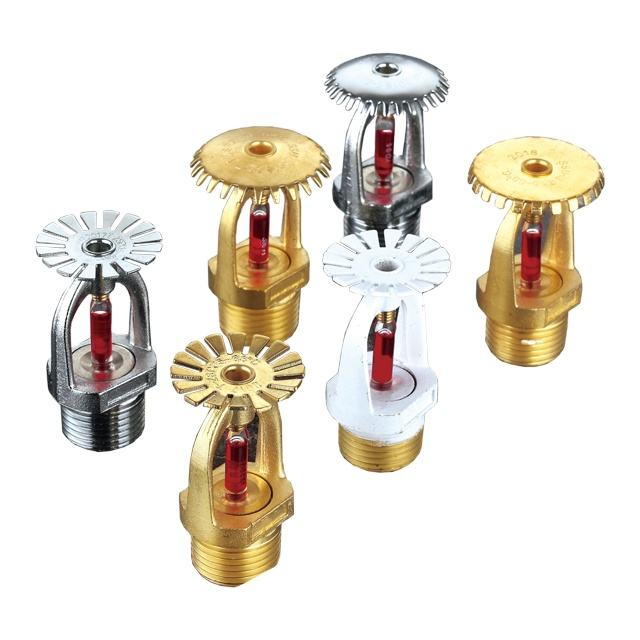
As the terminal execution component of the automatic sprinkler system, the state of fire sprinkler heads directly determines the fire extinguishing effect in the early stage of a fire. Since sprinklers operate on a core mode of automatic activation without manual operation, comprehensive pre-use inspection and status confirmation are particularly critical. Whether it is a newly installed sprinkler or a sprinkler after daily maintenance, the following 7 core precautions must be strictly implemented to ensure that the system can start reliably and spray water effectively in the event of a fire.I. Inspection of Sprinkler Type and Scenario Adaptability
- Core Requirement:Confirm that the sprinkler type (closed/open), activation temperature, and installation form (upright, pendent, sidewall) are fully matched with the usage scenario.
- Specific Points
- 68℃ closed glass bulb sprinklers should be used in ordinary commercial buildings and civil residences; high-temperature sprinklers of 93℃ or 141℃ are required for high-temperature places such as kitchens and boiler rooms.
- For open sprinklers used in special scenarios such as stages and power distribution rooms, it is necessary to confirm that their linkage logic with the fire detection system and deluge valve group is consistent.
- It is strictly forbidden to arbitrarily change concealed sprinklers used in suspended ceilings to exposed sprinklers, or replace sprinkler models that do not match the system pressure.
II. Inspection of Thermal Element and Sealing Performance (Exclusive to Closed Sprinklers)
- Thermal Element Inspection
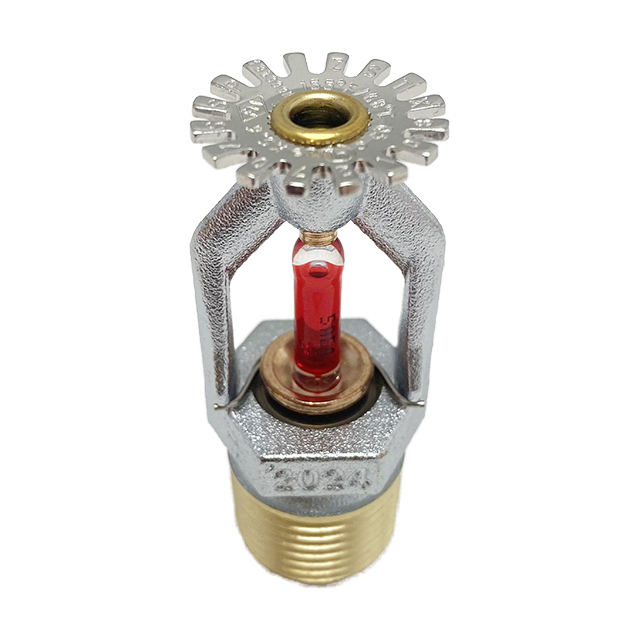
- Observe whether the glass bulb of the glass bulb sprinkler is intact without cracks, the internal filling liquid has no leakage, and the color mark corresponds to the activation temperature (e.g., red corresponds to 68℃).
- For fusible alloy sprinklers, check whether the alloy sheet is free of deformation and rust, and whether the fasteners are firm without the risk of loosening or falling off.
- Sealing Performance Confirmation
- Check whether the connection between the sprinkler base and the pipeline is well-sealed without water seepage or leakage.
- For newly installed sprinklers, confirm that their seal test report is qualified and that they have not been disassembled or modified.
III. Inspection of Sprinkler Appearance and Cleanliness
- Appearance Integrity:The sprinkler body is free of cracks, deformation, and rust, the nozzle is unobstructed, and the deflector is free of deformation or damage.
- Cleanliness Requirements
- The sprinkler surface is free of dust, oil stains, and paint coverage to avoid affecting the temperature sensing efficiency of the thermal element.
- For sprinklers installed in places with heavy dust and oil fume, clean the surface gently with compressed air or a soft cloth; flushing with chemical cleaners is strictly prohibited.
- Obstacle Investigation:There are no obstacles (such as ceiling decorations, pipelines, shelves) within 30cm of the sprinkler to ensure that water flow can evenly cover the protected area during spraying.
IV. System Linkage and Pressure Testing (Exclusive to Open Sprinklers)
- Linkage Function Test:Trigger the fire detection system (smoke/heat detector) to confirm that the deluge valve group can open automatically and the sprinkler can supply water and spray in a timely manner.
- Pipeline Network Pressure Inspection:Test whether the working pressure of the system pipeline network is within the rated range (0.15-0.3MPa) to ensure stable water pressure after sprinkler activation and that the water spray range meets the requirements.
- Manual Control Verification:Check whether the manual opening device (such as the manual ball valve of the deluge valve) is flexible and reliable to ensure that water spray can be triggered manually in case of automatic system failure.
V. Inspection of Installation Specifications and Fixing Reliability
- Installation Angle and Height:Upright sprinklers must be installed vertically, pendent sprinklers must be installed downward, and the installation height and spacing of sidewall sprinklers comply with design specifications.
- Fixing Reliability:The connecting thread between the sprinkler and the pipeline has no thread slippage, and the fasteners are not loose to avoid sprinkler falling off due to pipeline network water pressure fluctuations.
- Protective Device Inspection:For sprinklers installed in places prone to collision (such as garages and workshops), confirm that the anti-collision protective cover is intact, which not only does not affect temperature sensing but also prevents mechanical damage.
VI. Inspection of Product Certification and Validity Period
- Certification Document Confirmation:The sprinkler must have a certification certificate from the National Fire Product Quality Supervision and Inspection Center, and the product identification (model, specification, manufacturer, production date) is clear and complete.
- Service Life Verification:The service life of closed sprinklers is usually 5-10 years. Even if the appearance is not damaged, sprinklers exceeding the validity period must be replaced compulsorily.
- Prohibit Use of "Three-No Products":Sprinklers without certification, identification, or manufacturer have serious potential safety hazards and are strictly prohibited from being put into use.
VII. Confirmation of Maintenance Records and Fault Handling
- Check Maintenance Records:Confirm that the sprinkler has undergone regular inspection, cleaning, and rust-proof treatment as required, and the maintenance records are complete and traceable.
- Faulty Sprinkler Handling:For sprinklers with cracks, seal failure, or thermal element damage, immediately replace them with qualified products of the same model and activation temperature. Temporary repair and continued use are strictly prohibited.
- System Reset Inspection:If the sprinkler has undergone water test or simulated activation test, confirm that the system has been fully reset, the control valve has been restored to the normally open state, and the pipeline network water pressure has returned to normal.
Core Summary
Pre-use inspection of fire sprinkler heads is the first line of defense to ensure the reliable operation of the automatic sprinkler system. For closed sprinklers, the core is to confirm that the thermal element is intact, the seal is reliable, and the environment is unobstructed; for open sprinklers, the focus is to verify that the system linkage is normal, the pressure is stable, and the manual control is effective. Whether it is property management personnel, fire engineering construction units, or enterprise safety responsible persons, a regular inspection system should be established and the above precautions should be strictly implemented to avoid system failure due to sprinkler faults in the event of a fire and minimize fire losses to the greatest extent.