English
 日本語
日本語 Tiếng Việt
 繁體中文
繁體中文 بالعربية
 Արմենյան
 한국어
한국어 Русский
 Türkçe
 คนไทย
คนไทย nederlands
 Română
 Gaeilgenah Éireann
 Português
 Indonesia
 Polski
 Español
 magyar
 Nederlands
 हिंदी
हिंदी Eesti
Eesti
How to choose a suitable fire sprinkler head for different environments?
Fire Sprinkler Head Selection Guide for Different Environments: Choose the Right Sprinkler by Scenario to Protect Fire Safety
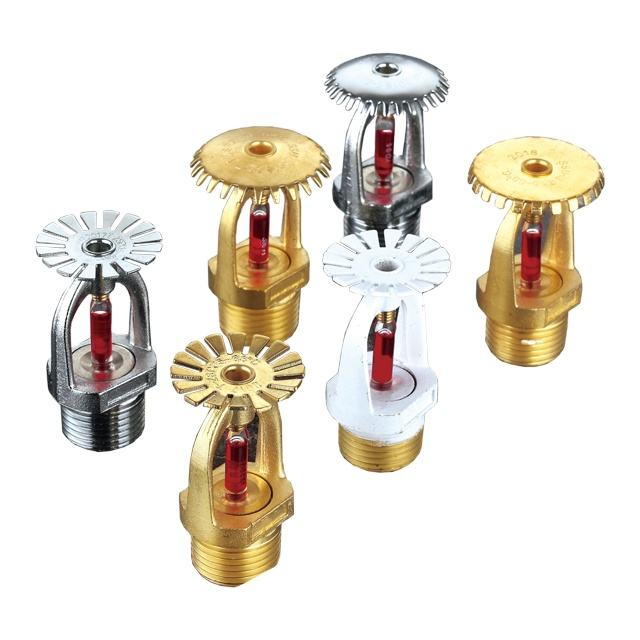
Fire sprinkler heads are core components of automatic sprinkler systems, and the rationality of their selection directly determines whether the system can respond quickly and control fires effectively in the early stage of a fire. Different environments have significant differences in temperature, humidity, medium, spatial structure, and fire source type, so it is necessary to select sprinkler type, activation temperature, material, and installation form in a targeted manner. This article comprehensively analyzes the selection standards and adaptation solutions of fire sprinkler heads around three categories of scenarios: industrial, civil, and special environments.I. Civil Building Environment (Residential Buildings, Office Buildings, Shopping Malls)
Environmental Characteristics:Dense personnel, moderate space height (2.8-5m), fire sources are mostly solid combustibles (furniture, textiles, office supplies), and stable ambient temperature (10-30℃).Core Selection Principle:Prioritize closed glass bulb sprinkler heads for a balance of response speed and safety.- Sprinkler Type:
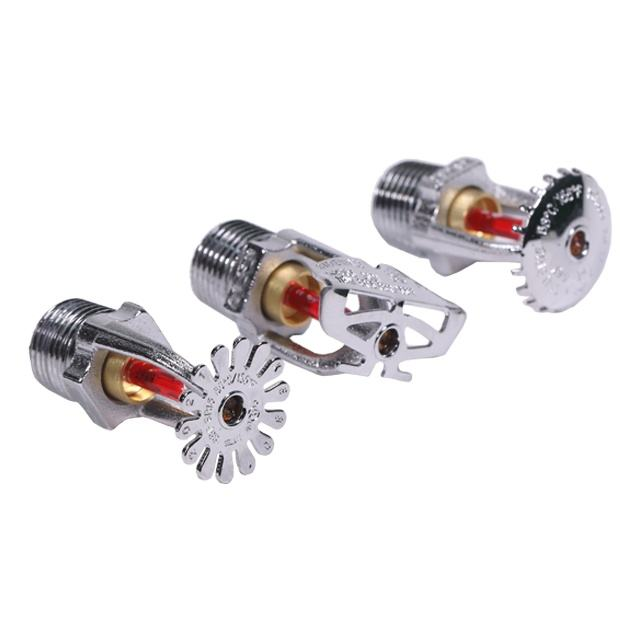
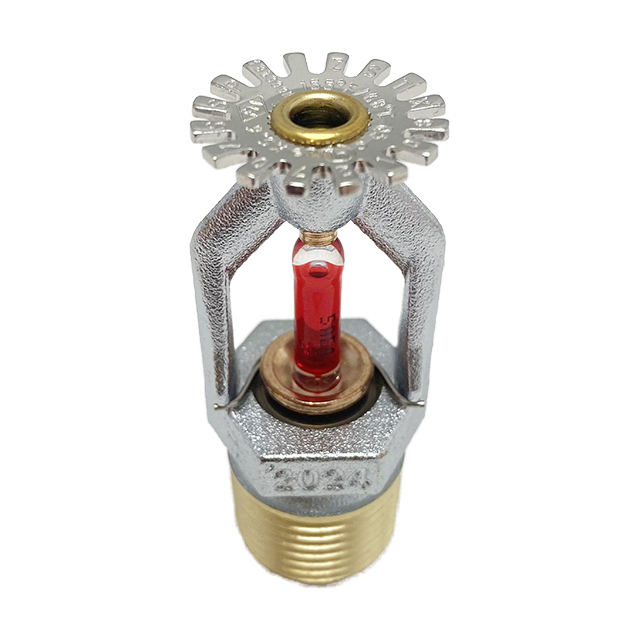
- Ordinary residential buildings and office buildings: Use pendent or upright closed sprinklers. Pendent sprinklers are suitable for under ceilings, while upright sprinklers are suitable for ceiling cavities or unceilinged areas.
- High-traffic areas such as shopping malls and corridors: Sidewall closed sprinklers can be used, installed on walls to save space and ensure uniform water spray coverage.
- Activation Temperature:Unified use of 68℃ red glass bulb sprinklers to meet the temperature trigger requirements in the early stage of civil building fires.
- Special Adaptation:
- Finely decorated residential buildings: Concealed closed sprinklers can be used. The sprinkler is hidden in the ceiling decorative cover without affecting indoor aesthetics. In case of fire, the decorative cover falls off automatically, and the sprinkler starts normally.
- Atriums of large shopping malls: When the space height exceeds 8m, large-drop sprinklers are required. Their large water drop size and long range can penetrate the hot fire airflow to ensure fire extinguishing effect.
II. Industrial Plant and Warehouse Environment
Environmental Characteristics:Open space (height 5-20m), complex fire sources (solid, liquid, electrical fires), and some areas have dust, high temperature, or corrosive media.Core Selection Principle:According to the type of goods stored in the warehouse and the production process of the plant, select high-flow, high-sensitivity, or special-purpose sprinklers.- Ordinary Machinery Processing Plants:
- Sprinkler Type: Upright closed sprinkler with an activation temperature of 68℃.
- Special Requirement: When there is equipment obstruction in the workshop, extended coverage area sprinklers are used. The protection area of a single sprinkler can reach 36 ㎡, reducing the number of sprinklers installed.
- High-Stacking Warehouses (stack height ≥6m):
- Sprinkler Type: Early Suppression Fast Response (ESFR) sprinklers, specially designed for high-stacking warehouses. They have a fast response time and large flow rate (≥100L/min), which can suppress fires before they spread.
- Activation Temperature: 74℃ (yellow glass bulb) to adapt to the higher ambient temperature in warehouses.
- Dust Workshops (Flour Mills, Cement Plants):
- Sprinkler Type: Closed sprinklers must be equipped with dust covers to prevent dust from blocking the nozzle or covering the thermal element.
- Material Requirement: The sprinkler body is made of stainless steel to avoid seal failure caused by dust corrosion.
III. Special Environments (Kitchens, High-Temperature, Corrosive, Outdoor)
Special environments have harsh working conditions, so special-purpose sprinklers are required to meet special requirements such as high temperature resistance, corrosion resistance, and anti-interference.- Kitchen Environment (Hotel and Canteen Kitchens)
- Environmental Characteristics:High temperature (normal working temperature 40-60℃), heavy oil fume, and fire sources are mostly edible oil fires.
- Selection Solution:Must use kitchen-specific sprinkler heads, which are divided into two types:
- Sprinkler Body: 93℃ green glass bulb sprinkler to adapt to the high-temperature environment of the kitchen and avoid false activation.
- Supporting System: Can be combined with a water mist fire extinguishing system. The sprinkler sprays fine water mist to quickly extinguish edible oil fires with minimal water damage.
- High-Temperature Environment (Boiler Rooms, Glass Factories, Steel Mill Workshops)
- Environmental Characteristics:The normal ambient temperature exceeds 40℃, and some areas can reach 80℃.
- Selection Solution:
- Sprinkler Type: Closed sprinklers. The activation temperature is selected according to the ambient temperature: 141℃ (blue), 182℃ (pink), or 227℃ (black) glass bulb sprinklers to ensure that the sprinkler will not be falsely activated due to normal working temperature.
- Material Requirement: Copper alloy sprinklers are used for high temperature resistance and anti-deformation.
- Corrosive Environment (Chemical Plants, Coastal Buildings)
- Environmental Characteristics:Presence of corrosive gases (such as chlorine, sulfur dioxide) or high salt spray (coastal areas), which can easily cause sprinkler rust and seal failure.
- Selection Solution:
- Sprinkler Type: Closed sprinklers, preferably stainless steel sprinklers, or brass sprinklers with anti-corrosion coating treatment.
- Installation Requirement: Corrosion-resistant gaskets are used at the connection between the sprinkler and the pipeline to avoid sprinkler fixation failure due to pipeline corrosion.
- Outdoor Open Environment (Stadiums, Open-Air Parking Lots)
- Environmental Characteristics:Large temperature changes, vulnerable to wind and rain, and unobstructed space.
- Selection Solution:
- Sprinkler Type: Open sprinkler heads with supporting deluge valve groups and fire detection systems. In case of fire, the system is linked and activated, and the sprinklers spray water over a large area.
- Material Requirement: Stainless steel sprinklers with anti-ultraviolet treatment on the surface to prevent aging.
IV. Summary of Core Selection Principles
- Match Ambient Temperature:The sprinkler activation temperature must be 10-15℃ higher than the maximum ambient temperature to avoid false activation; at the same time, it must be lower than the critical temperature in the early stage of fire to ensure rapid response.
- Adapt to Fire Source Type:Ordinary closed sprinklers for solid fires, ESFR sprinklers or water mist sprinklers for liquid fires, and open sprinklers combined with gas fire extinguishing systems for electrical fires.
- Meet Spatial Structure:Sidewall or concealed sprinklers for low spaces, ESFR or large-drop sprinklers for high spaces, and extended coverage area sprinklers for obstructed areas.
- Comply with Material Requirements:Stainless steel sprinklers for corrosive environments, copper alloy sprinklers for high-temperature environments, and sprinklers with dust covers for dusty environments.
V. Notes
- All sprinklers must pass the national fire product quality certification with clear product identification. The use of "three-no products" (no certification, no identification, no manufacturer) is strictly prohibited.
- During selection, refer to the Code for Design of Automatic Sprinkler Fire Extinguishing Systems (GB50084), and the design must be completed by professionals in combination with on-site actual conditions.
- After installation of special environment sprinklers, regular cleaning, anti-corrosion, and functional tests are required to ensure reliable operation in emergency situations.
Core Summary
The selection of fire sprinkler heads must be "adjusted to local conditions and fire types". Civil buildings focus on aesthetics and versatility, industrial environments focus on flow rate and sensitivity, and special environments focus on specialization and durability. Whether it is a fire engineering design unit, construction enterprise, or property manager, the selection principles must be strictly followed, and suitable sprinkler products must be selected in combination with environmental characteristics and system requirements. Only by choosing the right sprinkler can the automatic sprinkler system truly play the role of "early detection, early fire control, and early fire extinguishing" to maximize the protection of life and property safety.